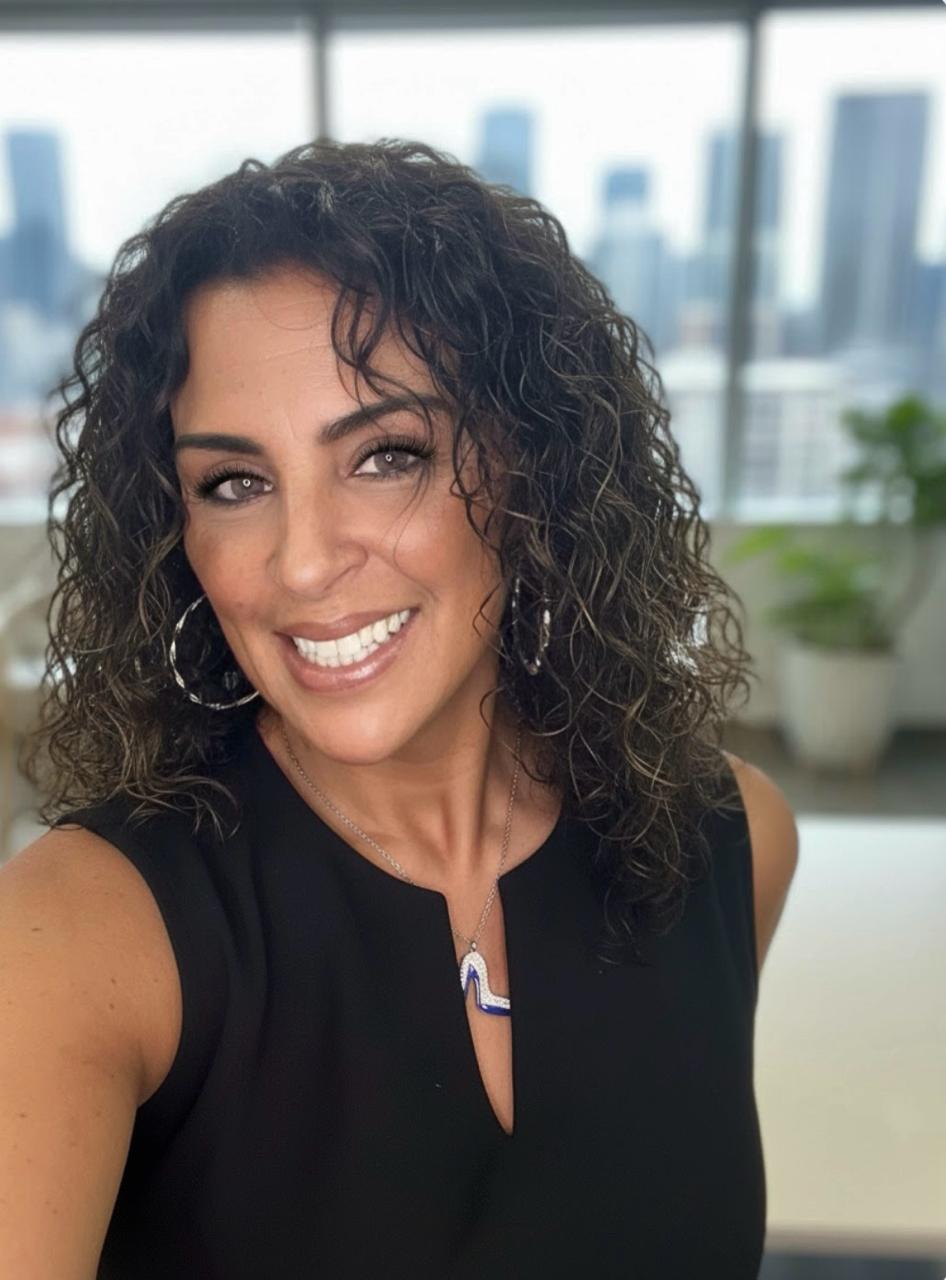
Meet the Movement is our blog series highlighting the folks who drive our work: the educators and administrators, the policymakers and researchers, the community members, students, advocates, and parents. In each edition, we sit down with a member of our community to hear what brought them to this work, what keeps them going, and why educator diversity matters to them personally.
Together, these are the leaders working to create a Pennsylvania where every classroom reflects the brilliance of the diversity of its students and every educator feels valued and equipped to thrive.
Tell us a little about yourself and your role. How would you describe what you do in your own words?
I currently serve as the Director of Student Success and Engagement for the Chester Upland School District in Pennsylvania. In this role, I have the privilege of supporting initiatives focused on student well-being, social-emotional learning, student voice, family engagement, multilingual learners, and equitable access to opportunities.
When people ask me what I do, my answer is simple: I help create the conditions where students, families, and educators feel seen, valued, and connected. Whether I am working with students experiencing homelessness, facilitating student leadership opportunities, supporting mental wellness initiatives, or partnering with community organizations, my work centers on belonging. I believe that when people feel that they matter, they are more likely to thrive.
I am also a social worker, therapist, consultant, and former classroom teacher, and I recently defended my dissertation successfully, earning my doctorate in educational leadership. Each of these experiences has shaped how I lead and how I advocate for students and educators.
What brought you to this work? Was there a moment, a person, or an experience that pointed you in this direction?
My journey has never followed a straight line. I began my career as a teacher, transitioned into social work and mental health leadership, and eventually returned to education because I missed the opportunity to directly impact students and school communities.
Growing up as a bilingual woman, I learned early that representation matters. There were times when I did not always see leaders who looked like me or shared similar experiences. Those experiences helped me understand the importance of creating spaces where young people can see themselves reflected in the adults who serve them.
Those experiences also inspired my doctoral research. My dissertation, Building Belonging and Relationships: A Comparative Case Study of The First Five SEL Practices in Elementary Schools, explored educators’ perceptions of how daily relationship-centered practices influence belonging and teacher-student relationships. Through my research, I found that belonging is not something that happens by chance, it is intentionally cultivated through trust, consistency, connection, and opportunities for students to feel seen and valued.
More than any single moment, it has been the collective experiences of students, families, and educators who have trusted me with their stories that have strengthened my commitment to this work.
Can you share a specific moment when you saw the impact of this work on a student, family, school, or community?
One of the most meaningful moments has been watching students discover the power of their own voice.
Through student leadership and student voice initiatives, I have seen students who were once hesitant to speak in front of a small group confidently present before educators, community leaders, and their peers. I have watched students realize that their perspectives matter and that they can influence positive change within their schools.
I remember a student who shared that, for the first time, they felt like adults were truly listening. That statement stayed with me because it reinforced something I have always believed: students do not need us to speak for them; they need us to create opportunities for them to be heard.
Those moments remind me that meaningful change often begins with relationships, trust, and listening.
Why does educator diversity matter to you personally?
Educator diversity matters because representation matters, but it also matters because relationships matter.
As both an educational leader and researcher, I have seen how students thrive when they experience authentic connections with the adults in their schools. While my dissertation focused on social-emotional learning and belonging, one of the strongest findings was the importance of relational trust, the belief that students are known, valued, respected, and supported by the adults around them.
Diverse educators bring unique lived experiences, cultural perspectives, languages, and identities that enrich school communities and strengthen opportunities for meaningful connection. Students deserve to learn from educators whose experiences broaden their understanding of the world and help them see new possibilities for themselves.
For me, educator diversity is ultimately about creating environments where every student and every educator feels a genuine sense of belonging.
What impact has PEDC had on your journey?
PEDC has been both a source of inspiration and a community of purpose throughout my leadership journey.
As someone whose work centers on belonging, student voice, social-emotional learning, and educational equity, PEDC has connected me with passionate educators and leaders across Pennsylvania who share a common commitment to ensuring that all students have access to supportive, inclusive, and affirming learning environments. Being part of this consortium has reinforced that this work is bigger than any one district or individual, it is a collective movement.
Through my involvement with PEDC, particularly through the Summit Planning Committee, I have had the opportunity to collaborate with talented professionals, elevate important conversations around representation and belonging, and contribute to meaningful learning experiences for educators across the Commonwealth. Those experiences have challenged me to think more broadly, lead more intentionally, and continue advocating for systems and policies that value diverse perspectives and lived experiences.
PEDC’s mission also aligns closely with my doctoral research, which explored how intentional relationship-building practices foster belonging and strengthen school communities. My findings reinforced the importance of relational trust, connection, and representation through culturally responsive social emotional learning practices... principles that are reflected in PEDC’s work and vision.
Most importantly, PEDC has reminded me that meaningful change happens through relationships. The consortium has provided a space where ideas are welcomed, voices are valued, and leaders are empowered to continue pushing this work forward. For that, I am incredibly grateful. We are truly a family... somos una familia
As I continue my journey as an educator, social worker, leader, and researcher, I am proud to stand alongside others who believe that every student deserves to feel seen, every educator deserves to feel valued, and every school community deserves to experience a true sense of belonging.
What gives you hope right now? What are you holding onto?
What gives me hope is the people.
I find hope in educators who continue to show up for students despite challenges. I find hope in students who are courageous enough to share their experiences and advocate for change. I find hope in families and communities who continue to partner with schools in meaningful ways.
I just defended my dissertation and completed my Doctor of Education degree, and my research has reaffirmed something I have long believed as both an educator and social worker: belonging is foundational to learning. Across two different school districts, educators consistently described how intentional daily practices helped students develop emotional awareness, build stronger relationships, and feel more connected to their school communities.
That finding gives me hope because it reminds us that meaningful change does not always require large-scale initiatives. Sometimes it begins with a greeting at the classroom door, a moment of reflection, a conversation that builds trust, or an educator who takes the time to truly know a student.
I continue to hold onto the belief that when we invest in relationships, we invest in possibility. Every student deserves to feel that they matter, and every educator deserves the opportunity to help make that possible.
Whether you’re looking to learn more about our initiatives, need assistance, or just want to connect—let's talk. Your questions and feedback are important to us, and we’re eager to hear from you!